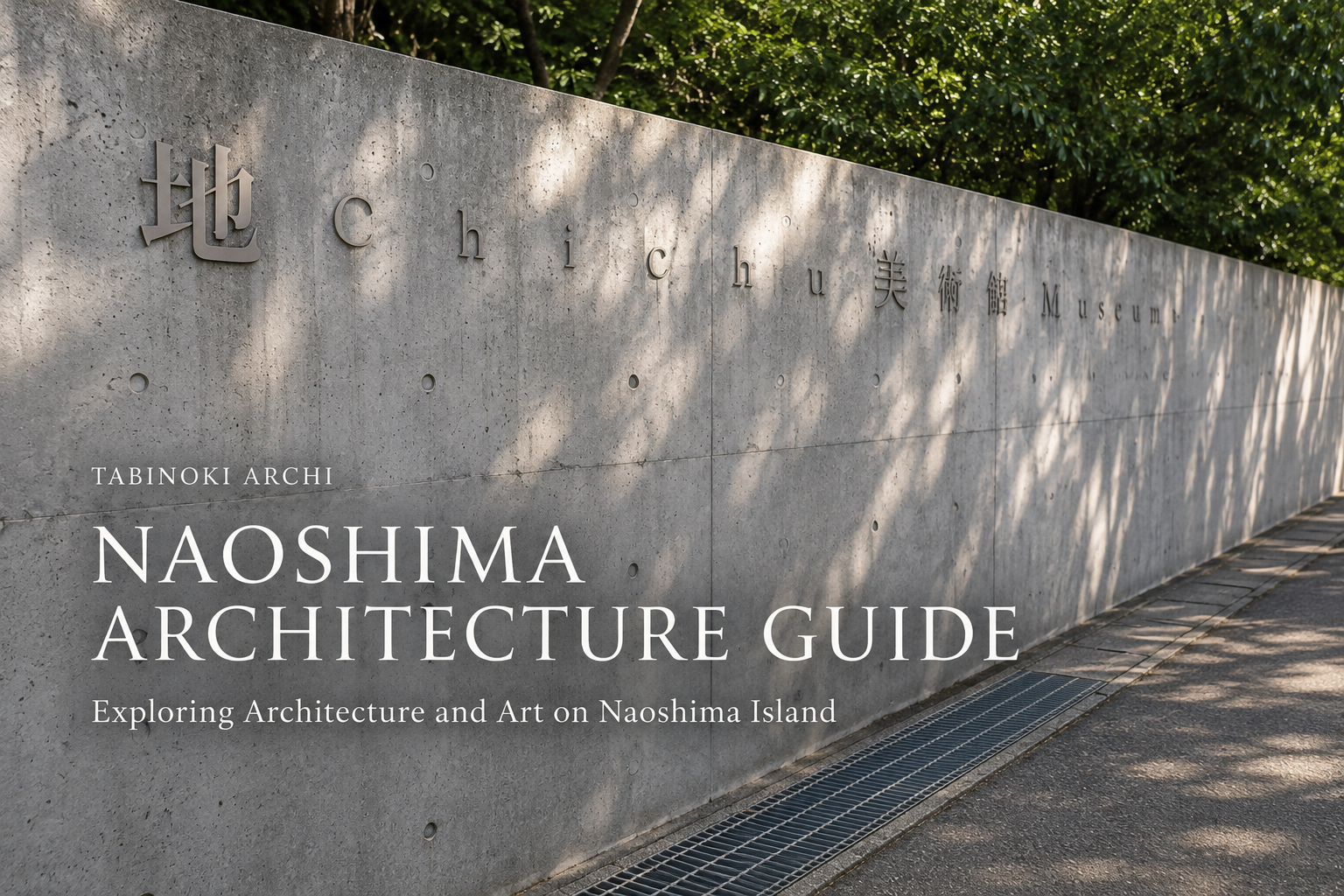
Exploring Naoshima through an architect’s eyes, with two young children
On September 21, 2025, my family of four visited Naoshima, one of Japan’s most fascinating art islands in the Seto Inland Sea. Traveling with our two children, aged six and four, we explored several architectural highlights, including Chichu Art Museum, Naoshima New Museum of Art, and ANDO MUSEUM.
As an architectural designer, I am always drawn to the relationship between buildings, light, and their surroundings. This was my third visit to Naoshima, but my first time visiting with my children. I was curious to see how they would experience the island’s architecture and contemporary art.
In this guide, I’ll share our itinerary, architectural highlights, practical travel tips, and a place we would happily stay at again.
- 1. Getting to Naoshima from Okayama
- 2. Chichu Art Museum: Architecture, Light, and the Sky
- 3. Naoshima New Museum of Art: Discovering Tadao Ando’s Architecture
- 4. ANDO MUSEUM: A Small Museum with a Lot to Discover
- 5. Where We Stayed: Wright Style Annex
- 6. Our Naoshima Day Trip: Itinerary at a Glance
- Final Thoughts: Experiencing Naoshima Through Architecture
1. Getting to Naoshima from Okayama
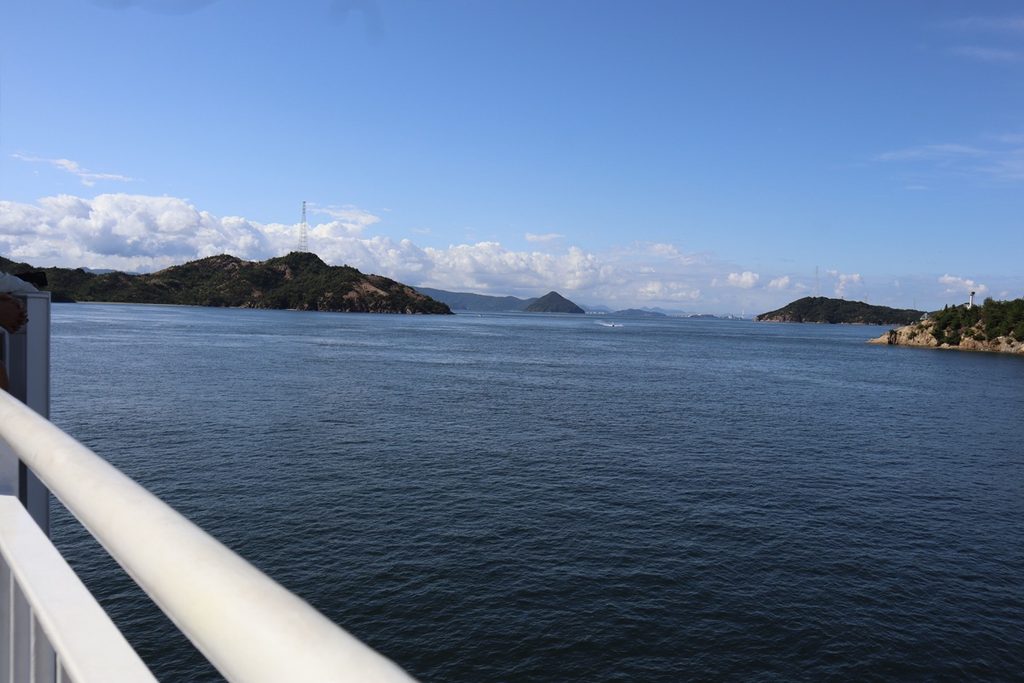
We started our journey at Okayama Station, taking the 8:15 a.m. Ryobi Bus to Uno Port. We arrived at 9:08 a.m. and caught the 9:22 a.m. ferry to Miyanoura Port on Naoshima, arriving at 9:42 a.m.
A few tips for getting there:
- Arrive at the bus stop early. The Ryobi Bus can accommodate many passengers, but a queue may form before boarding.
- Use the restroom before boarding. The bus journey takes about an hour, so it is worth taking care of this before departure, especially when traveling with children.
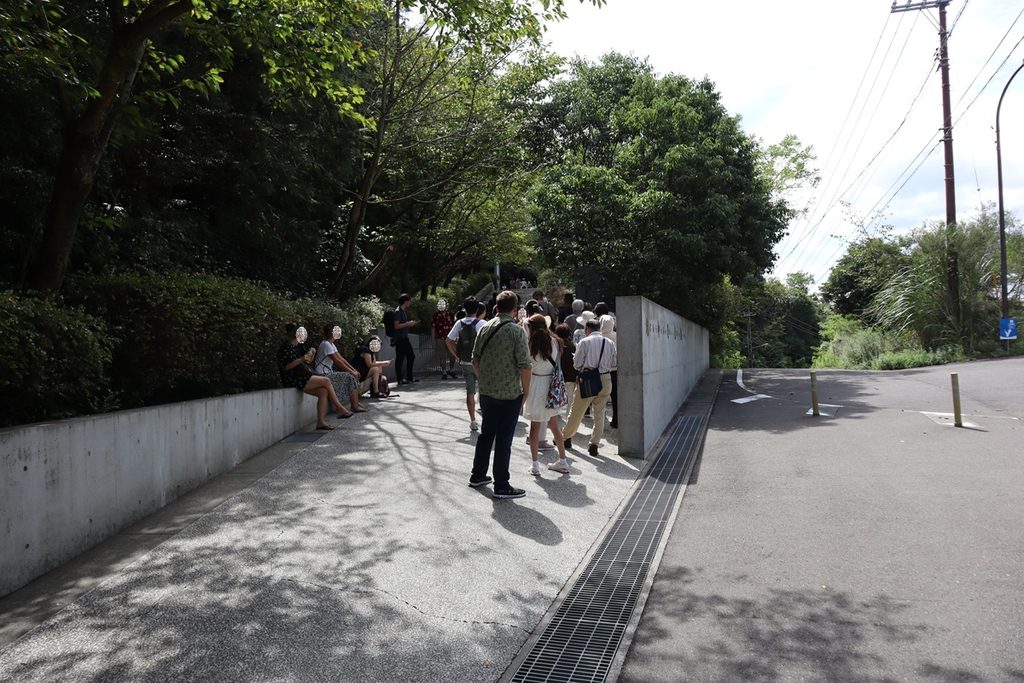
- Line up early for the bus to Chichu Art Museum. After arriving at Miyanoura Port, we headed straight to the bus stop. Other ferry passengers were also waiting for the same bus.
- Take the bus if you are traveling with young children. Walking from Miyanoura Port to Chichu Art Museum takes around 30 minutes, so the bus is a more convenient option for families.
We had reserved our tickets for Chichu Art Museum for 10:45 a.m., so we headed directly to the museum bus stop after arriving at the port.
Note: Ferry and bus schedules may change. Check the latest timetables before your trip.
2. Chichu Art Museum: Architecture, Light, and the Sky
Chichu Art Museum was one of the highlights of our trip.
Designed by Tadao Ando, the museum is largely built underground to preserve the natural landscape of Naoshima. Rather than dominating its surroundings, the architecture follows the contours of the land, allowing the landscape to remain an essential part of the experience.
What makes this museum special is not only its architecture, but also the way it uses natural light and frames views of the sky.
This was my third visit, and I still found myself moved by the same moments that had impressed me the first time. At the same time, returning to a familiar place allowed me to notice details I had overlooked before.
This time, I also had the pleasure of experiencing the museum with my children.
I wondered what a six-year-old and a four-year-old would find fascinating. Would they notice the architecture? Would the artworks capture their attention? Seeing the museum through their eyes became part of the experience.
Experiencing James Turrell’s Art with Children
One of the most memorable parts of our visit was experiencing the works of James Turrell.
In Turrell’s Room, my children were fascinated by the artwork. After quietly taking it in, they began talking about what they thought and felt.
I found it interesting that they could experience something meaningful without needing an adult to explain what they were looking at. Their interpretations were their own, and I enjoyed listening to them.
We also spent some time together in Open Sky, another work by James Turrell.
In everyday life, we rarely set aside time simply to look at the sky. There is always something else to do, somewhere else to go, or something else to see.
But here, it felt completely natural to stop and look upward for a while.
I think this is one of the most beautiful aspects of Chichu Art Museum. It encourages visitors not just to look at art, but also to slow down and experience light, space, and nature.
The combination of architecture, natural light, and the sky is what keeps drawing me back to this museum. Even after three visits, it remains one of my favorite places.
3. Naoshima New Museum of Art: Discovering Tadao Ando’s Architecture
After enjoying Chichu Art Museum, we took the bus toward Naoshima New Museum of Art, which opened in 2025.
We stopped at Tsutsujiso to transfer buses and had lunch at Naoshima Shokudo.
▶ Find Naoshima Shokudo on Google Maps
I had been looking forward to visiting this new museum, so it was one of the places I particularly wanted to see on this trip.
At the time of our visit, online tickets were slightly cheaper, and we did not need to select a specific entry time. If you plan to visit, check the museum’s official website for current ticket prices and admission arrangements.
A Compact Museum with Impressive Vertical Spaces
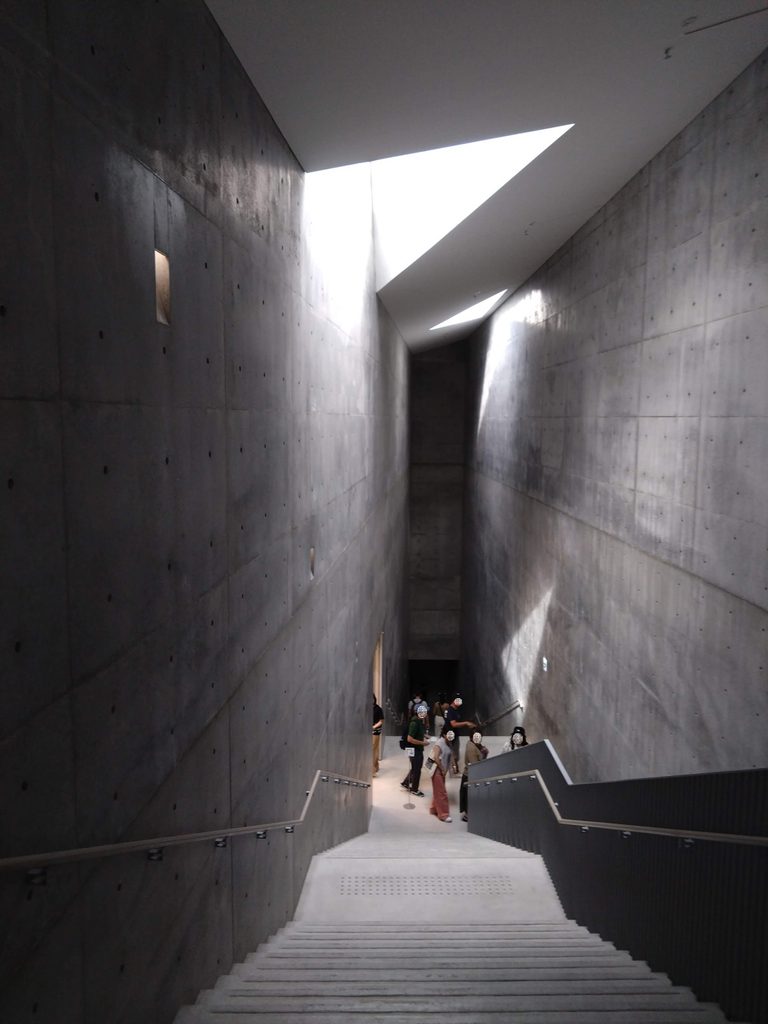
Compared with Chichu Art Museum, Naoshima New Museum of Art felt relatively compact. However, the architecture made a strong impression on me.
The staircase connecting the different levels was particularly striking. I loved the way natural light entered the stairwell and changed the atmosphere of the space.
The circulation was also interesting. With so much movement between levels, I sometimes lost track of which floor I was on. This made exploring the building feel like a journey in itself.
Beyond the architecture, the contemporary artworks were another pleasant surprise. Some of the exhibits were engaging for children, including works that encouraged a more interactive experience.
We ended up spending more time inside than I had expected.
I enjoyed not only observing Ando’s architecture, but also sharing the artworks with my children and hearing their impressions.
For me, that is one of the joys of visiting art museums as a family: we can look at the same work and come away with different thoughts and feelings.
4. ANDO MUSEUM: A Small Museum with a Lot to Discover
Our next stop was ANDO MUSEUM.
Since both Naoshima New Museum of Art and ANDO MUSEUM closed at 4:30 p.m. during our visit, I recommend visiting the New Museum first and then heading to ANDO MUSEUM.
ANDO MUSEUM is a small space, so you can walk through it relatively quickly. However, there is plenty to appreciate if you take your time.
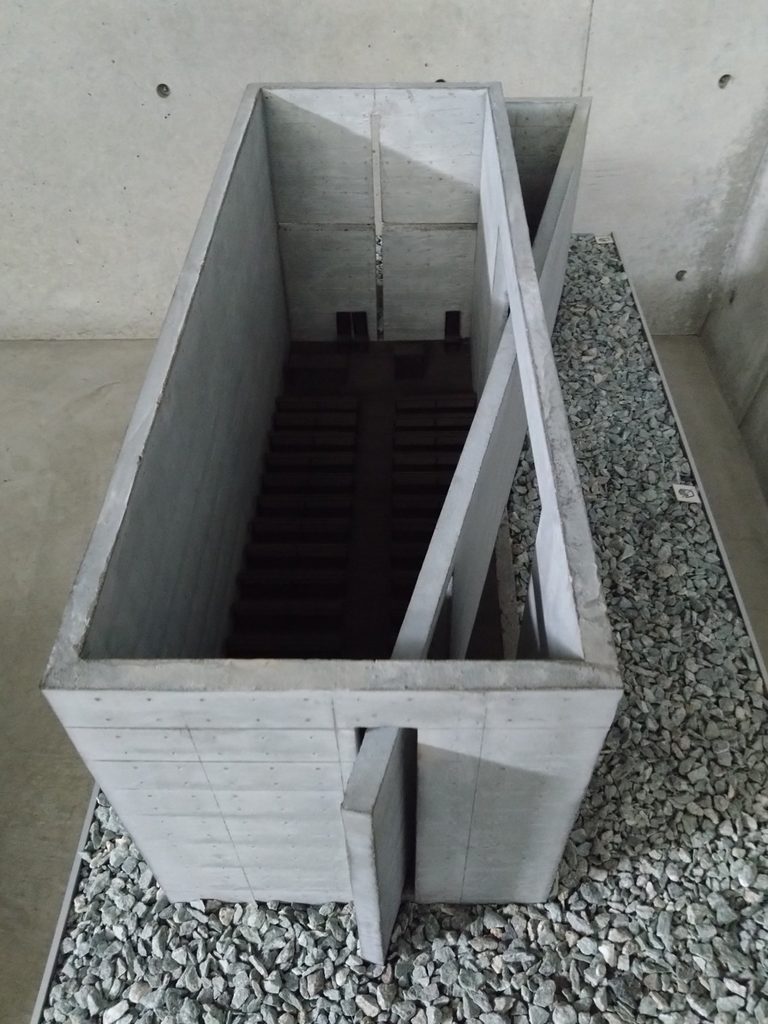
The museum displays Tadao Ando’s sketches, concrete models, and other materials that offer a glimpse into his architectural process.
I enjoyed seeing these materials alongside the building itself. They provided another way to appreciate the thinking behind his architecture.
A Relaxing Break Near the Art House Project
On the same street, you can also find Minamidera, part of the Art House Project, as well as Hifumiyo Coffee and Honmura Park.
By this point, the children were ready for a break from museums. They played at the park while I picked up a takeaway coffee from Hifumiyo Coffee and relaxed nearby.
Meanwhile, my husband used the opportunity to visit Minamidera, which he had reserved.
It worked out well for our family. We could continue enjoying the area without asking the children to spend the entire afternoon inside museums.
If you are visiting Naoshima with young children, I recommend leaving some flexibility in your schedule. A nearby park or a short coffee break can make a big difference to the overall experience.
▶ Find Hifumiyo Coffee on Google Maps
▶ Find Minamidera (Art House Project) on Google Maps
▶ Find Honmura Park on Google Maps
5. Where We Stayed: Wright Style Annex
After a full day of exploring Naoshima’s architecture and art, we headed to Wright Style Annex, where we would spend the night.
When I made the reservation, there were already few rooms available, so I remember booking in a hurry. We ended up staying in the annex next to the main Hotel Wright Style building.
Because it was an annex, I had not expected too much before arriving.
However, once we were shown inside, the whole family was pleasantly surprised.
The accommodation felt much more spacious and comfortable than a typical hotel room. It had the feeling of having our own private space, making it easy for all four of us to relax after a busy day.
The amenities were also well equipped, and there was plenty of room for our family.
We stayed in Room 102, the Deluxe Twin (DX). Even with two young children, we did not feel cramped.
This was a place I would happily stay at again.
▶ Wright Style ANNEX official website: https://wrightstyle.jp/annex.html
We stayed in Room 102, the Deluxe Twin (DX), with our family of four. Even with two children, the room was spacious enough for us to feel comfortable without feeling cramped.
▶ Book Wright Style ANNEX on Booking.com
Check the hotel’s current room types, availability, and family occupancy arrangements before booking.
Dinner at a Local Okonomiyaki Restaurant
For dinner, we walked to Umikko, a local okonomiyaki restaurant near our accommodation.
The restaurant had a welcoming atmosphere, with the feel of a place where local residents gather. We enjoyed the okonomiyaki and were happy to have found somewhere that felt a little more local than a typical tourist restaurant.
After dinner, we stopped by the main hotel’s lobby.
We had received complimentary coffee vouchers when checking in, so we spent some time there enjoying coffee and snacks together.
The lobby had an atmosphere that reminded me of Frank Lloyd Wright’s architecture. It felt a little as though we had stepped into a different country, which was a lovely way to end the day.
After a full day of architecture, art, and island exploration, we were all happy and relaxed.
▶ Find Umikko on Google Maps
6. Our Naoshima Day Trip: Itinerary at a Glance
Here is a summary of our itinerary on September 21, 2025.
| Time | Activity |
|---|---|
| 8:15 a.m. | Ryobi Bus from Okayama Station |
| 9:08 a.m. | Arrive at Uno Port |
| 9:22 a.m. | Ferry departs for Naoshima |
| 9:42 a.m. | Arrive at Miyanoura Port |
| 10:45 a.m. | Reserved entry to Chichu Art Museum |
| Around midday | Bus transfer at Tsutsujiso and lunch at Naoshima Shokudo |
| Afternoon | Naoshima New Museum of Art |
| Afternoon | ANDO MUSEUM and the Honmura area |
| Evening | Check in at Wright Style Annex and dinner at Umikko |
This itinerary reflects our own visit. Actual travel times depend on bus and ferry schedules, museum reservations, and how long you choose to spend at each location.
Final Thoughts: Experiencing Naoshima Through Architecture
Naoshima is an island where architecture, contemporary art, and nature come together in a remarkable way.
For me, returning to Chichu Art Museum for the third time was a reminder that a place can feel different each time you visit. The architecture had not changed, but my experience of it had.
This time, I was able to share that experience with my children and see how they responded to the art, the light, and the spaces around them.
Naoshima New Museum of Art and ANDO MUSEUM offered different perspectives on Tadao Ando’s architecture, while the small breaks at the park and coffee shop made the day enjoyable for the whole family.
If you are interested in architecture, contemporary art, or simply discovering a different side of Japan, Naoshima is well worth including in your itinerary.
The next day, we continued our journey to Teshima, another island in the Seto Inland Sea, to explore more art and architecture.
Curious about our visit to Teshima Art Museum? Read my guide to Teshima for more about its unique architecture, contemporary art, and beautiful island scenery.
▶ Teshima Art Museum & Island Hopping: A Family Day Trip in Japan’s Setouchi Islands
コメント